
What a session actually looks like
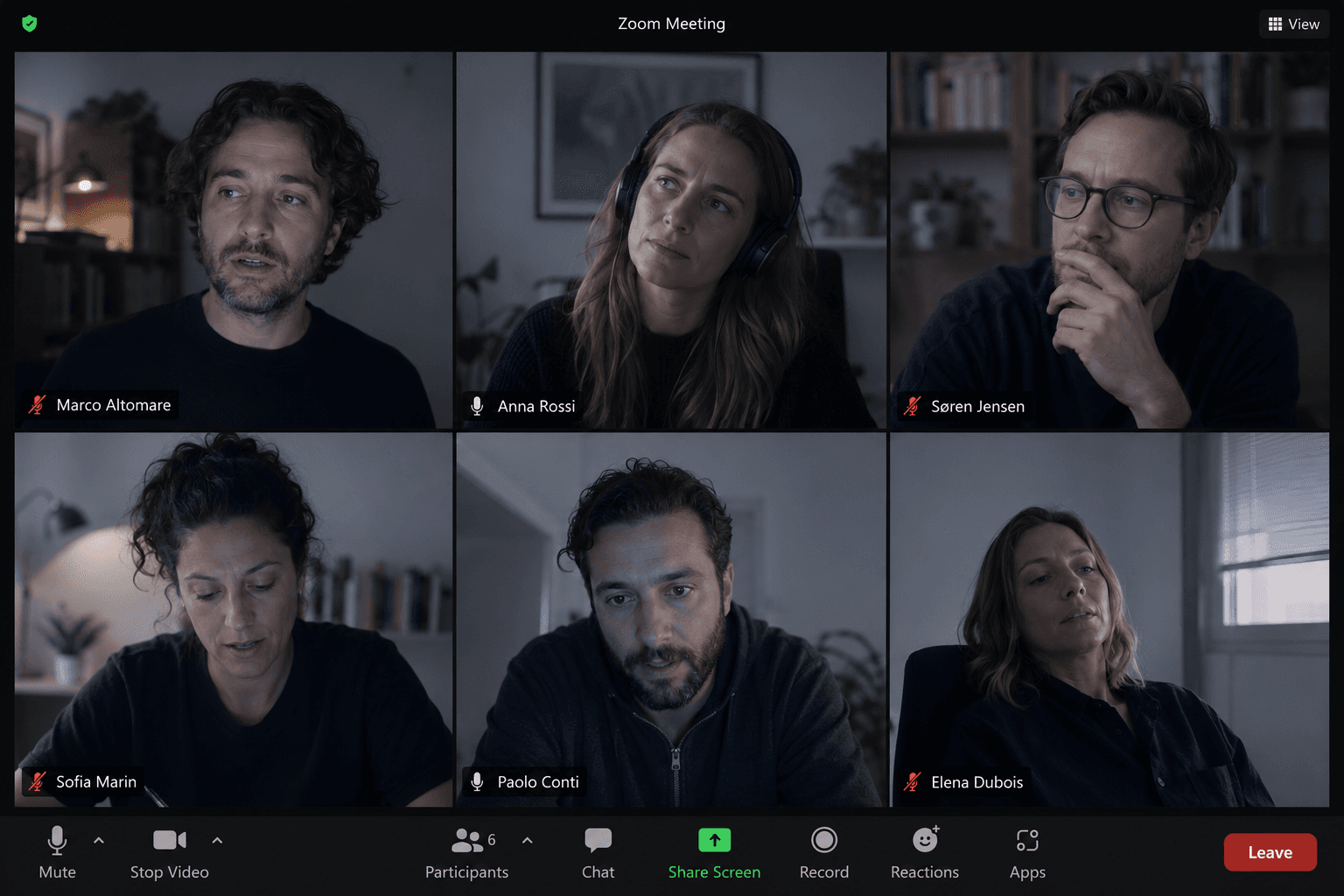
Not a lecture and not a 1:1 lesson. A small group of engineers works a realistic technical scenario together, in English, with an instructor steering.
The scenarios
Every session is a situation you actually face at work.
Design Review
Present and defend your technical decisions. Answer tough questions from peers.
Incident Postmortem
Walk a room through a timeline, root cause, and remediation without hedging.
Sprint Stand-up
Give a crisp update, surface risks early, and ask for what you need.
Client Call
Translate technical detail into commitments a non-technical stakeholder can act on.
Technical Decision
Argue make-vs-buy, quantify a trade-off, and hold your position under scrutiny.
Architecture Review
Evaluate a design end to end and say what breaks first at scale.
How each session flows
- 1
Scenario brief
Everyone gets the context and prep materials in advance. You arrive with an opinion, not a blank page.
- 2
Role assignment
You are the Tech Lead, the SRE, the sceptic. Roles rotate week to week so you practise every seat at the table.
- 3
Live discussion
50 minutes of guided, unscripted conversation with 4 to 6 peers and one instructor.
- 4
Feedback & error log
The instructor and your peers give actionable notes. Recurring mistakes are logged from the recording so you can see your patterns.
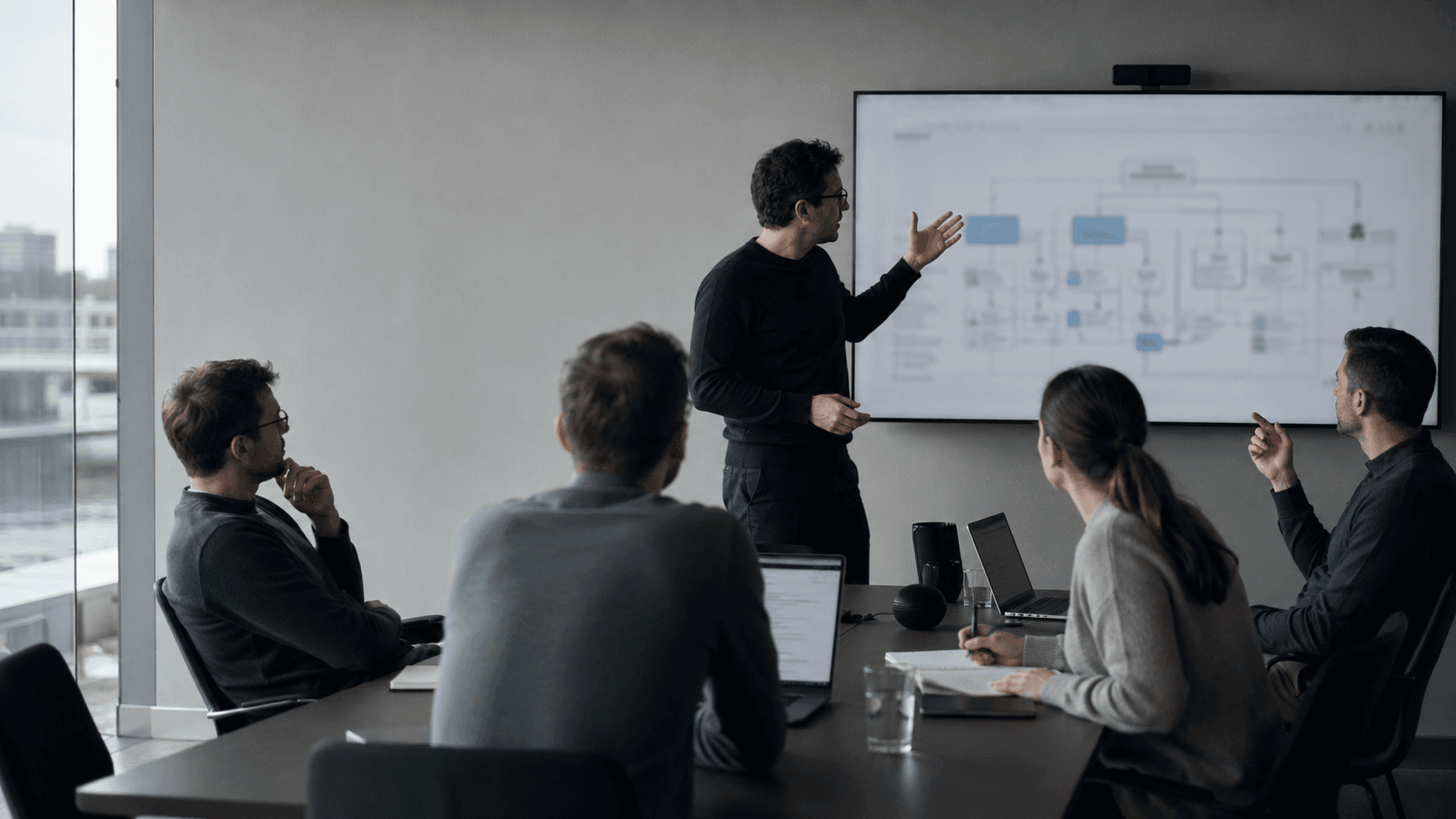
Why a group, not a tutor?
The hard part of working in English is not grammar - it is holding your ground in a room full of other people. A one-to-one lesson cannot rehearse that. A cohort can: you practise disagreeing, interrupting, and being interrupted, with people at your level and in your field.